What Is Vehicle-to-Grid (V2G) Charging?
Vehicle-to-Grid (V2G) charging is technology that allows an electric vehicle to do more than just receive power from the electrical grid — it allows the EV to send stored energy back to the grid, to a building, or to a home. An EV equipped with V2G capability becomes a mobile battery: it can help power your home during an outage, reduce your building’s peak electricity demand, or supply power to the grid when demand is highest — earning revenue or utility credits for the owner in return.
Canada continues to advance zero-emission transportation, with a federal target of 100% zero-emission new light-duty vehicle sales by 2035. As EV adoption grows, their potential grid impact grows too. V2G can turn part of that impact into a grid-management resource. See Transport Canada’s clean on-road transportation action plan.
Elocity is developing HIEV: Nano, a nano-grid controller designed to integrate EV charging, solar PV and battery storage under one intelligent energy-management system.
V1G, V2H, V2B, V2G and V2X: What’s the Difference?
The terms V1G, V2H, V2B, V2G and V2X describe different modes of smart EV charging — ranging from controlled one-way charging to bidirectional energy export. Each mode has different hardware requirements, regulatory implications and potential financial outcomes.
| Mode | Direction | What it does | Primary benefit |
| V1G – Smart charging | Grid → EV | Software manages charging time and power based on grid signals and time-of-use pricing. | Lower charging cost and reduced grid peaks. |
| V2H – Vehicle-to-Home | EV → Home | The EV supplies a home during outages or selected peak periods. | Backup power and potential peak-period savings. |
| V2B – Vehicle-to-Building | EV → Building | Bidirectional EV energy supports a commercial or multi-unit building. | Peak shaving and potential demand-charge reduction. |
| V2G – Vehicle-to-Grid | EV → Grid | The EV exports stored energy to the distribution grid. | Potential grid-services revenue and grid support. |
| V2X – Vehicle-to-Everything | Bidirectional | Umbrella term covering V2H, V2B, V2G and V2L. | Maximum flexibility across supported use cases. |
How Vehicle-to-Grid Works: The Technical Basics
The hardware layer
A V2G-capable EV needs hardware that supports bidirectional power transfer. Depending on the architecture, that can involve a bidirectional onboard charger or DC bidirectional charging through a compatible protocol. The EV supply equipment must also support bidirectional operation; a conventional one-way Level 2 charger cannot provide V2G by itself.
For emerging interoperable implementations, ISO 15118-20 defines communication messages and sequence requirements that support bidirectional power transfer between an EV and EVSE.
The software layer
A charge point management platform such as Elocity’s HIEV CPMS manages when and how much energy flows, using inputs such as utility grid signals, time-of-use pricing, on-site solar generation, building demand and vehicle departure requirements. The goal is to charge when energy is advantageous and, where V2G programs and compatible hardware permit, export energy when it provides the greatest grid or site value.
HIEV: Nano adds a nano-grid controller layer designed to coordinate EV charging with solar PV and battery storage under the HIEV platform.
The financial layer
Potential V2G value streams include demand response, ancillary services, avoided demand charges and utility bill credits, depending on local market rules. In Ontario, the IESO’s Distributed Energy Resources resources provide useful context on how DERs can participate in and support the electricity system.
Who Benefits from V2G and Why?
EV owners and residential users
- Backup power during outages when the EV and home system support V2H.
- Potential electricity-bill savings by charging during lower-cost periods and using stored energy strategically during higher-cost periods.
- Potential revenue or credits from grid services where eligible utility programs exist.
Property managers and condo / strata buildings
- V2G-capable vehicles can act as distributed storage, potentially helping reduce building peak demand.
- Residents may be able to participate in demand-response or future grid-service programs, subject to utility rules and compatible infrastructure.
Fleet operators
Fleet vehicles that spend predictable periods parked and plugged in can become flexible energy assets. V2G can complement smart charging and peak shaving at depots, particularly where demand charges matter. For fleet electrification planning and available resources in B.C., see BC Hydro’s fleet resources.
Utilities and grid operators
Coordinated EVs can form part of a broader distributed-energy-resource strategy, supporting peak management and other grid services. See the IESO DER overview for Ontario context.
V2G in Canada: Where Are We Now?
Vehicle-to-Grid (V2G) charging in Canada is moving from pilots toward early commercial deployment. Availability depends on four pieces coming together: compatible vehicles, bidirectional charging hardware, utility or market rules, and approved metering arrangements for energy transactions.
| Readiness factor | Current picture | What to watch |
| V2G-capable EVs | Availability remains limited and varies by vehicle, connector and market. | Broader OEM adoption of bidirectional standards and services. |
| Bidirectional charging hardware | Purpose-built bidirectional systems are emerging alongside legacy CHAdeMO-based deployments. | Interoperable hardware supporting newer bidirectional standards. |
| Utility / grid framework | DER participation is evolving and V2G-specific commercial programs remain market-dependent. | Utility pilots, tariffs and market-participation rules. |
| Metering | Commercial energy measurement is regulated and bidirectional use cases require appropriate metering treatment. | Measurement Canada requirements and utility program rules. |
| Communications | ISO 15118-20 supports bidirectional power-transfer communications. | OEM, EVSE and backend interoperability at scale. |
For current Canadian references, see Measurement Canada’s EV charging information, NRCan’s Energy Innovation Program – Smart Grids and the Zero Emission Vehicle Infrastructure Program (ZEVIP).
Which EVs Support Bidirectional Charging in Canada?
Vehicle capability is changing quickly, and V2G, V2H and V2L are not interchangeable. A vehicle that can power external loads does not automatically support grid export. Always confirm the specific model year, trim, charger and utility requirements before treating a vehicle as V2G-ready.
- Nissan LEAF — historically one of the best-known CHAdeMO-based bidirectional platforms; availability and supported services depend on compatible equipment and local programs.
- Mitsubishi Outlander PHEV — supports bidirectional use in certain configurations and markets; confirm Canadian V2H/V2G equipment compatibility.
- Ford F-150 Lightning — supports home backup power with compatible Ford home-energy equipment; V2H capability should not be assumed to equal utility V2G participation.
- Hyundai IONIQ 5 / IONIQ 6 — offer V2L on supported configurations; broader bidirectional grid services depend on vehicle, equipment and market support.
- GM Ultium-based EVs — bidirectional home-energy capabilities vary by model and equipment; verify current GM Energy compatibility for the specific vehicle.
For mass-market interoperable V2G, ISO 15118-20 is an important communications standard because it includes bidirectional power-transfer requirements.
Elocity’s HIEV: Nano and the V2G Opportunity
HIEV: Nano is Elocity’s nano-grid controller designed to connect solar PV, on-site battery storage and EV chargers with intelligent energy management. It is intended to support V1G smart charging and grid-supportive use cases, with V2H/V2G capability dependent on compatible vehicles, charging hardware and utility programs.
HIEV: Nano is designed to work with HIEV CPMS, Elocity’s cloud-based charge point management platform. Together, the platform can coordinate charging schedules, site load, solar generation and storage. Learn more about Elocity’s smart EV charging hardware and dynamic load management.
V2G for Condo and Strata Buildings
Large parking facilities with many EVs could eventually aggregate meaningful battery capacity. When compatible vehicles are parked and connected, coordinated energy management could help a building reduce peaks or participate in future utility programs.
For property managers planning charging today, interoperable, networked and smart-charging-ready infrastructure creates a stronger foundation for future energy services than unnetworked charging. The practical priority is to preserve flexibility: select standards-based charging infrastructure and a management platform capable of adapting as bidirectional technology and utility rules mature.
V2G for Fleet Operators: Grid Value and Cost Reduction
Fleet depots are a promising V2G use case because many vehicles have predictable dwell times. Electric buses, last-mile delivery fleets and corporate vehicle pools can provide a controllable charging resource when their operating schedules leave enough energy and time for grid-supportive activity.
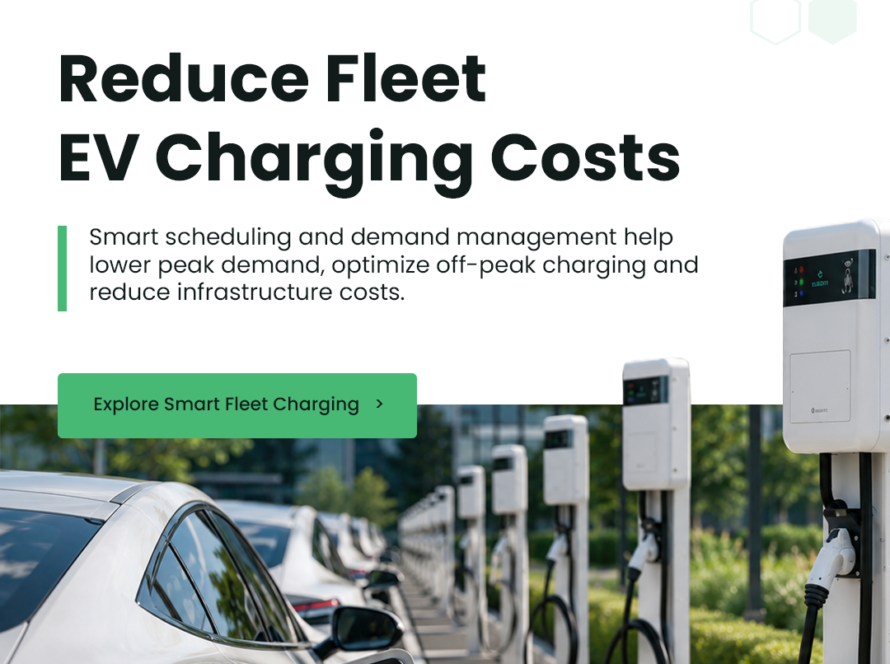
Even before full V2G participation becomes widely available, fleets can use smart scheduling and dynamic load management to control charging costs and site demand. V2G could add another value stream where bidirectional hardware, vehicle support and market programs align.
Frequently Asked Questions
What is V2G charging?
Vehicle-to-Grid (V2G) charging allows an electric vehicle to export stored battery energy back to the electrical grid. Related bidirectional modes include V2H, where an EV powers a home, and V2B, where it supports a building.
When will V2G be available in Canada?
V2G is already being demonstrated in Canada, but broad commercial availability depends on compatible EVs and bidirectional chargers, utility programs, interconnection rules and metering. Availability therefore varies by province, utility, vehicle and use case rather than having one nationwide launch date.
What is the difference between V2G, V2H and V1G?
V1G is managed one-way charging from the grid to an EV. V2H allows an EV to supply a home or building. V2G allows an EV to export energy to the grid and can enable grid services where regulations and utility programs permit.
Which EVs support V2G in Canada?
Support is model-, equipment- and market-specific. Some vehicles support V2H or V2L but not full utility V2G. Confirm the current capability of the exact model year, trim, bidirectional charger and utility program before assuming V2G compatibility.
Can my EV power my home in Canada?
Yes, if the vehicle supports V2H or an equivalent home-backup function and is paired with compatible bidirectional home-energy equipment. Installation and interconnection requirements also apply.
What is HIEV: Nano and how does it support V2G?
HIEV: Nano is Elocity’s nano-grid controller designed to coordinate EV charging with solar PV and battery storage. Its bidirectional use cases depend on compatible vehicles, EVSE and local utility or grid programs.
Does V2G degrade an EV battery?
Battery wear depends on factors such as cycling frequency, depth of discharge, temperature and battery chemistry. Managed V2G strategies can place limits on state of charge and cycling, but vehicle-warranty terms and OEM guidance should always be checked.
Is Elocity’s platform designed for secure smart charging?
Elocity states that HIEV CPMS is designed for secure, networked EV charging management. Organizations with specific security, compliance or data-residency requirements should confirm the current contractual and certification scope with Elocity for their deployment.
Preparing for V2G Today
Vehicle-to-Grid (V2G) charging has the potential to turn parked EVs into flexible energy resources for homes, buildings, fleets and electricity systems. But readiness is not only about the vehicle: it also depends on interoperable charging hardware, intelligent software, utility programs, interconnection and metering.
For organizations planning EV charging infrastructure now, the practical step is to build on standards-based, networked smart charging that can evolve with the V2G ecosystem. Explore HIEV CPMS or contact Elocity to discuss V2G-ready charging strategy.