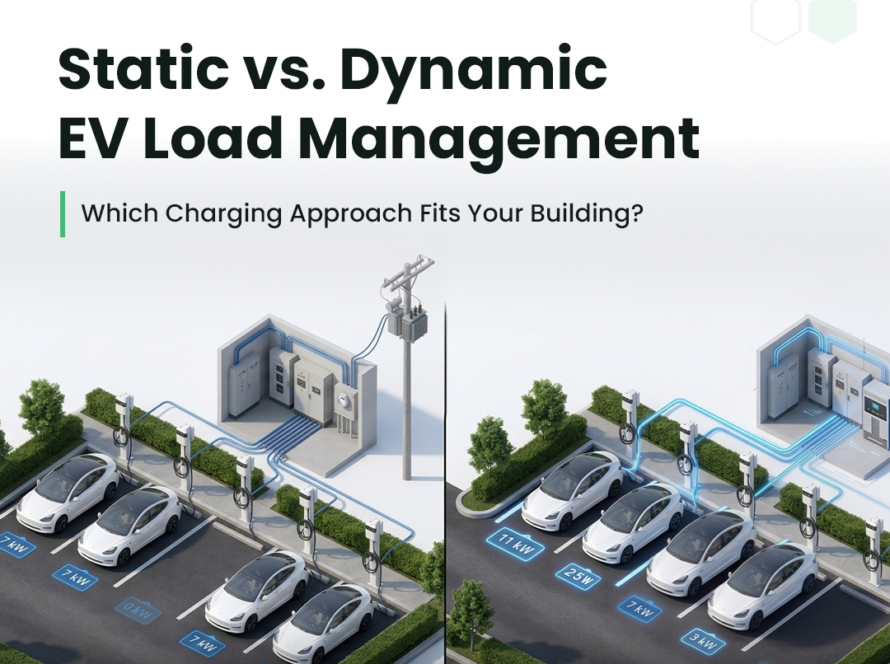
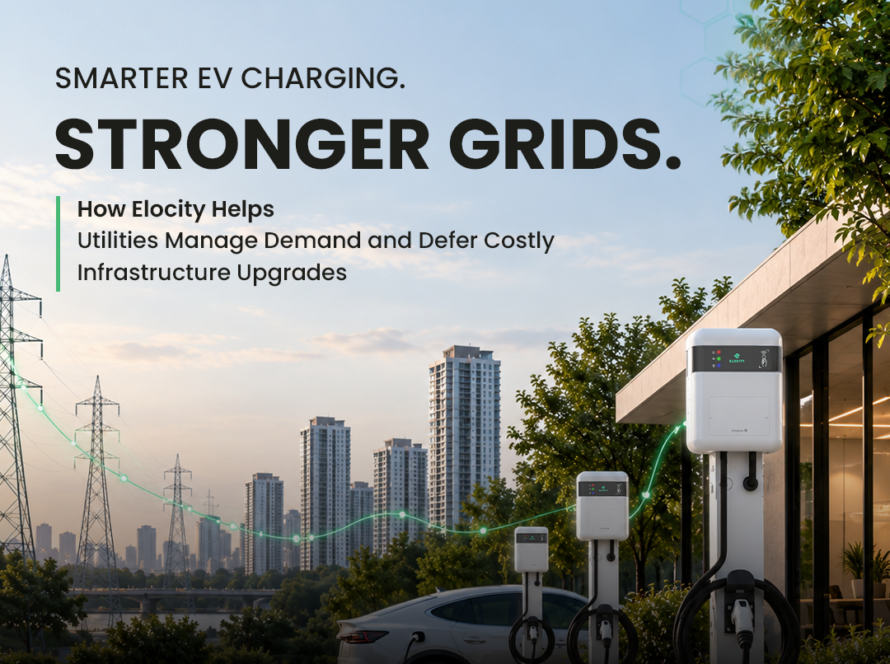
Smart scheduling, dynamic load management and accurate energy monitoring can make fleet electrification more affordable and predictable.
Why Fleet EV Charging Costs More Than Expected
For most fleet operators, actual fleet EV charging costs are not what they initially expected. Although electricity typically costs less than the fuel it replaces, demand charges, missed off-peak rates and oversized electrical infrastructure can significantly increase the total cost of fleet charging. Smart scheduling and demand management can help fleets reduce charging costs by controlling when vehicles charge, how much power they draw and how available electrical capacity is distributed across the depot. Elocity’s HIEV CPMS provides these capabilities through a unified, OCPP-compatible charging management platform.
- Demand charges: When several vehicles begin charging simultaneously, the resulting power spike can set the site’s demand charge for the entire month.
- Oversized infrastructure: Without load management, electrical systems may be designed for every charger operating at full power simultaneously—often leading to unnecessary panel and service upgrades.
- Missed off-peak rates: Vehicles may begin charging as soon as they are plugged in, even when electricity rates are higher, preventing fleets from taking full advantage of lower-cost overnight and weekend periods.
Six Key Fleet EV Charging Cost Drivers
| Cost driver | What causes it | How smart charging helps |
| Demand charges | Multiple chargers operate at full power simultaneously. | Dynamic load management limits total demand and distributes power across active chargers. |
| Missed off-peak rates | Vehicles charge immediately after being plugged in. | Time-of-use scheduling moves charging into lower-cost periods. |
| Oversized infrastructure | Electrical service is designed for maximum simultaneous demand. | Managed power sharing reduces or defers infrastructure upgrades. |
| Idle charger consumption | Chargers remain energized when not in use. | Real-time monitoring redirects capacity and reduces unnecessary consumption. |
| Manual billing errors | Charging costs are estimated without accurate sub-metering. | Certified sub-metering provides reliable, session-level energy data. |
| Utility penalties | Charging pushes the site above its contracted demand threshold. | Real-time controls reduce power before the threshold is exceeded. |
Five Smart Scheduling Strategies
The right charging strategy depends on fleet size, departure requirements, utility tariffs and the availability of real-time vehicle data.
1. Fixed Overnight Scheduling
Vehicles charge during a predefined overnight window. This is effective for smaller fleets with predictable operating schedules, although late-arriving vehicles may receive less charging time.
2. Time-of-Use Optimized Scheduling
Charging is automatically concentrated within the lowest-cost utility rate periods. This works well for fleets operating under time-of-use electricity tariffs.
3. Shift-Start Guarantee
The platform calculates how much time each vehicle needs to reach its required state of charge before departure. Priority vehicles can be scheduled first to protect operational readiness.
4. Dynamic Demand-Capped Charging
The platform continuously monitors site demand and adjusts the power delivered to individual chargers, keeping the charging load within a configurable demand limit.
5. Utility Demand Response
Fleet charging can be reduced or shifted automatically when a utility signals a demand-response event. Participating fleets may receive bill credits or incentives while supporting grid reliability.
Demand Charge Management: The Highest-Value Lever
A demand charge is a component of commercial electricity billing based on the site’s highest power draw during a defined interval—commonly 15 minutes—rather than its total electricity consumption. If 20 vehicles begin charging simultaneously at the end of a shift, that brief power spike may determine the site’s demand charge for the entire month. One unmanaged event can therefore offset weeks of otherwise efficient energy use. Dynamic load management addresses this problem by monitoring the building’s total demand in real time and adjusting the charging power delivered to each vehicle. Instead of allowing every charger to operate at maximum power simultaneously, the system distributes available capacity according to vehicle priority, departure time and charging requirements. This flattens the demand curve, reduces peak consumption and helps prevent utility penalties.
Time-of-Use Rate Optimization
Time-of-use tariffs charge different rates depending on when electricity is consumed. Overnight, weekend and holiday periods are often less expensive than weekday daytime hours. Fleet operators should review current rate structures from their utility or market operator, such as the Independent Electricity System Operator (IESO) in Ontario or BC Hydro in British Columbia. Smart scheduling integrates the fleet’s charging plan with its utility rate structure. It determines how much energy each vehicle requires and schedules charging within the lowest-cost available window while ensuring the vehicle is ready before departure.
Estimating the ROI of Smart Fleet Charging
When estimating fleet EV charging costs, the business case should consider both recurring operational savings and one-time infrastructure savings. In many deployments, avoiding or deferring a major electrical upgrade can be as valuable as reducing ongoing electricity costs.
| Cost category | Unmanaged charging | Smart charging |
| Demand charges | Simultaneous charging creates a high monthly peak. | Dynamic load management limits and flattens peak demand. |
| Energy costs | Charging occurs across peak and off-peak periods. | Sessions are concentrated within lower-cost windows. |
| Infrastructure | Each port may require dedicated electrical capacity. | Managed power sharing allows multiple ports to use available capacity. |
| Utility penalties | Demand may exceed contracted thresholds. | Real-time controls keep the site within configured limits. |
| Billing | Costs may require manual allocation. | Session-level metering automates energy tracking and reporting. |
Important: Savings vary by fleet size, electricity tariff, charging behaviour and depot configuration. Site-specific analysis is recommended before making an investment decision.
Choosing the Right Strategy for Each Fleet
| Fleet type | Primary concern | Recommended approach |
| Transit or electric bus depot | High demand from simultaneous overnight charging | Dynamic demand caps with departure-time guarantees |
| Last-mile delivery fleet | Overnight energy costs and shift readiness | Time-of-use scheduling with shift-start guarantees |
| Corporate fleet | Variable arrivals and mixed charging demand | Dynamic load management with priority queuing |
| Emergency or municipal fleet | Continuous vehicle availability | Priority charging within a controlled demand limit |
| Mixed public and fleet site | Balancing fleet cost with public revenue | Separate schedules, tariffs and billing groups |
Solar, Energy Storage and Vehicle-to-Grid Integration
Smart scheduling can coordinate EV charging with on-site solar generation and battery energy storage. Fleet vehicles can charge from surplus solar during the day and lower-cost grid electricity overnight, while storage can help reduce demand peaks. As vehicle-to-grid technology develops, compatible fleet vehicles may also become dispatchable energy assets. Stored energy could support demand-response events, generate bill credits or provide backup capacity—creating additional value beyond transportation.
Government Funding for Fleet Charging in Canada
Canadian fleet operators may qualify for federal, provincial and utility programs that help reduce fleet EV charging costs and infrastructure costs. Potential resources include NRCan’s Zero Emission Vehicle Infrastructure Program (ZEVIP), BC Hydro EV charging rebates and Transport Canada’s zero-emission vehicle resources. Program availability, eligibility and application status should be confirmed before project planning.
Frequently Asked Questions
1. How can fleet EV charging costs be reduced?
Dynamic load management, time-of-use scheduling and accurate energy monitoring can lower peak demand, move charging into less expensive periods and reduce the need for oversized electrical infrastructure—together, these are the most effective ways to reduce fleet EV charging costs.
2. Why do demand charges matter for EV fleets?
Demand charges are based on the site’s highest power draw during a billing period. When several vehicles charge simultaneously, even a short peak can significantly increase the monthly bill.
3. What is dynamic load management?
It continuously monitors available electrical capacity and adjusts power delivered to each charger, preventing excessive demand while prioritizing vehicles according to operational requirements.
4. How does time-of-use scheduling reduce costs?
It moves charging into lower-cost periods, typically overnight or on weekends, while calculating when each session must begin to ensure the vehicle is ready before departure.
5. Can a fleet install chargers without upgrading its electrical panel?
In many cases, managed power sharing can reduce or defer an upgrade. The final requirement depends on existing capacity, fleet size, charging power and operating schedule.
6. What fleet charging grants are available in Canada?
Programs may include NRCan funding, provincial initiatives and local utility incentives. Eligibility and current availability should be confirmed before installation begins.
7. What happens when vehicles return at different times?
A smart platform can incorporate vehicles as they arrive and continuously recalculate the schedule based on state of charge, departure time, priority and available capacity.
8. Can smart charging software work with different charger brands?
An OCPP-compatible platform can support multiple manufacturers and models, allowing mixed hardware to be managed through unified scheduling, monitoring and reporting.
9. Make Fleet Charging Costs More Predictable
Fleet EV charging costs are not fixed—they depend heavily on how intelligently the charging load is managed. Elocity, a Smart Electric Vehicle Charging Technology Company, provides HIEV CPMS to help fleets schedule charging, manage site demand, optimize electricity rates and monitor charging operations across compatible hardware—all aimed at reducing fleet EV charging costs.
REQUEST A FREE FLEET EV CHARGING ASSESSMENT Contact Elocity’s Fleet Team connect@elocitytech.com | +1 (416) 384-1919